Waterloo Farm, Late Devonian South African fossil site recognised as one of the most important geological sites on Earth
Share:


Waterloo Farm, the famous 365-million-year-old fossil site outside Makhanda in the Eastern Cape, has been recognised as one of the most important geological sites on Earth. The International Union of Geological Sciences (IUGS) included it as one of 400 sites recognised by its International Commission on Geoheritage. These sites have been selected by an international panel as key places of international scientific relevance. They have made a substantial contribution to the development of geological sciences through history.
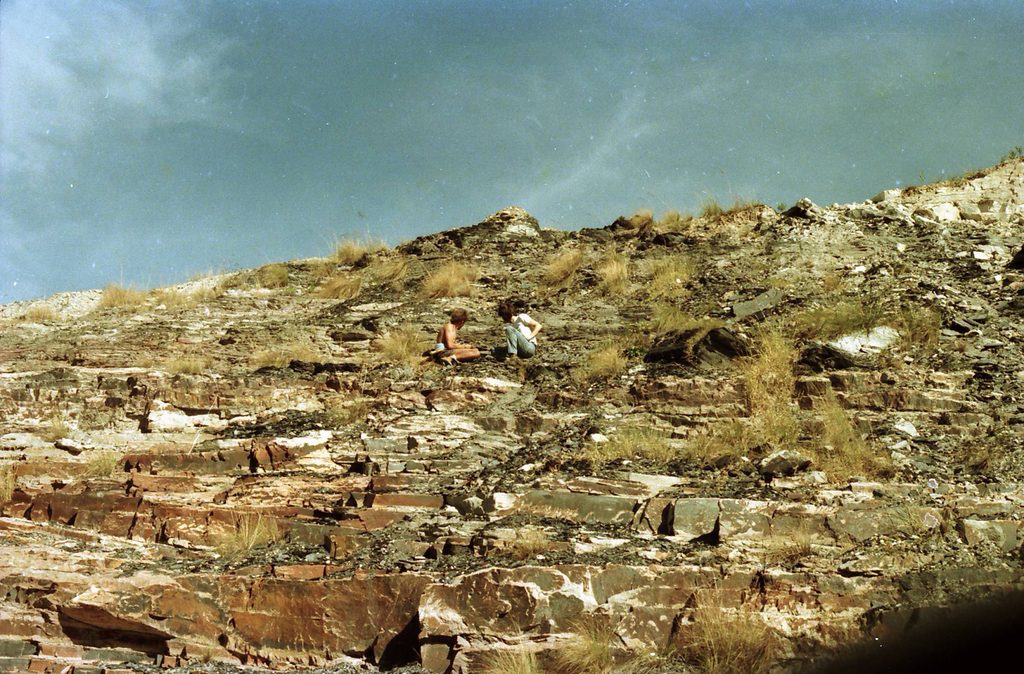
According to the IUGS entry on Waterloo Farm, it is included “as it provides the only comprehensive window into vertebrate and plant diversity at polar palaeolatitudes during the Late Devonian – all other significant sites represent the palaeotropics. The rich fauna and flora have overturned many palaeogeographic assumptions, including belief that the earliest tetrapods (four-legged-animals) were exclusively tropical and that the earliest woody trees were tropical to warm-temperate in distribution. Furthermore soft-tissue preservation continues to provide unique insights into anatomy and ontogeny of many organisms. For example, publication of a complete ontogeny of the oldest known lampreys challenged long-held evolutionary scenarios by demonstrating lack of larvae in described Palaeozoic taxa.”
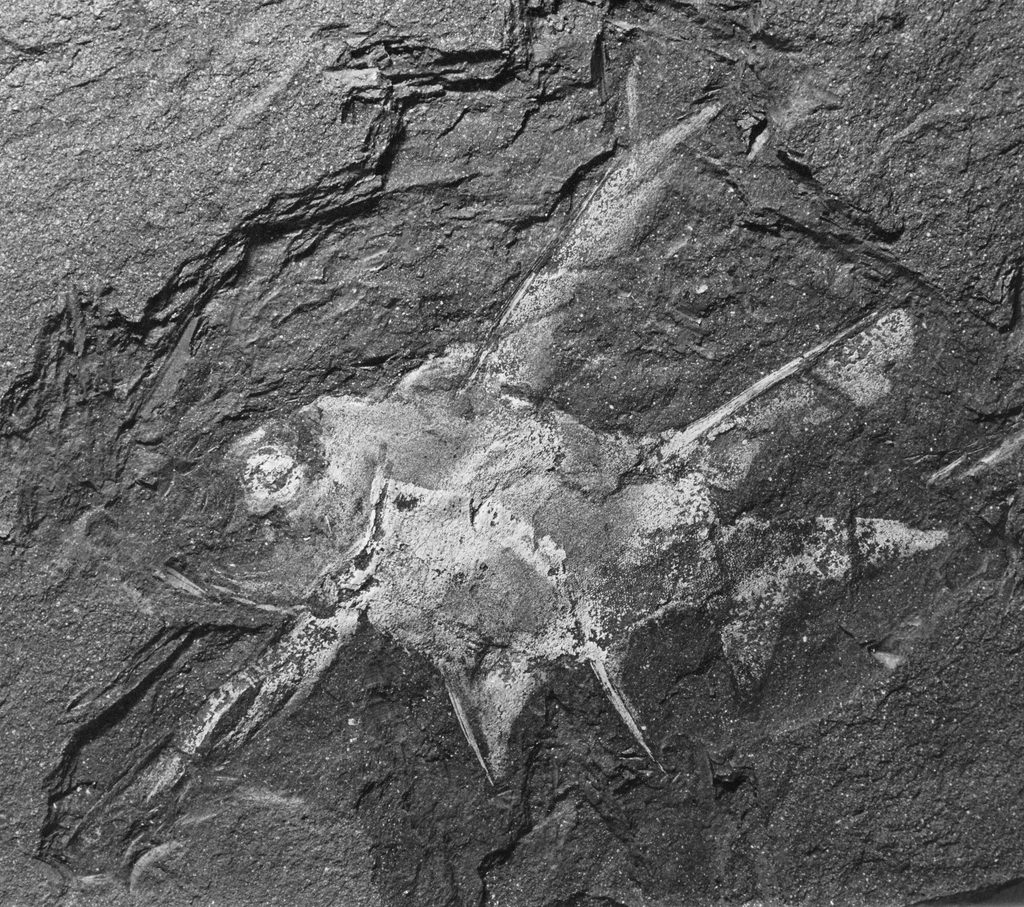
Example of exquisite soft tissue preservation from Waterloo Farm, the 10 cm long Holotype of the acanthodian Angelacanthus acus
The Third 100 were revealed on 6 November at a biannual Conference Event of the IUGS in Monchique, Portugal, held from 3 to 6 November. The third of four batches of sites is included in an attractive illustrated book volume, The Third 100 IUGS Geological Heritage Sites. It gives a brief illustrated account of each site. This is the third of a set of four envisaged volumes. The First 100 IUGS Geological Heritage Sites was released in 2022, whereas the fourth and final volume is to be released in 2028. Other sites included in The Third 100 include some of the world’s most iconic geological sites. Among them are Mount Fuji in Japan, the Norwegian fjords, the San Andreas Fault in the United States, Mount Aconcagua in Argentina, and the Chocolate Hills in the Philippines.
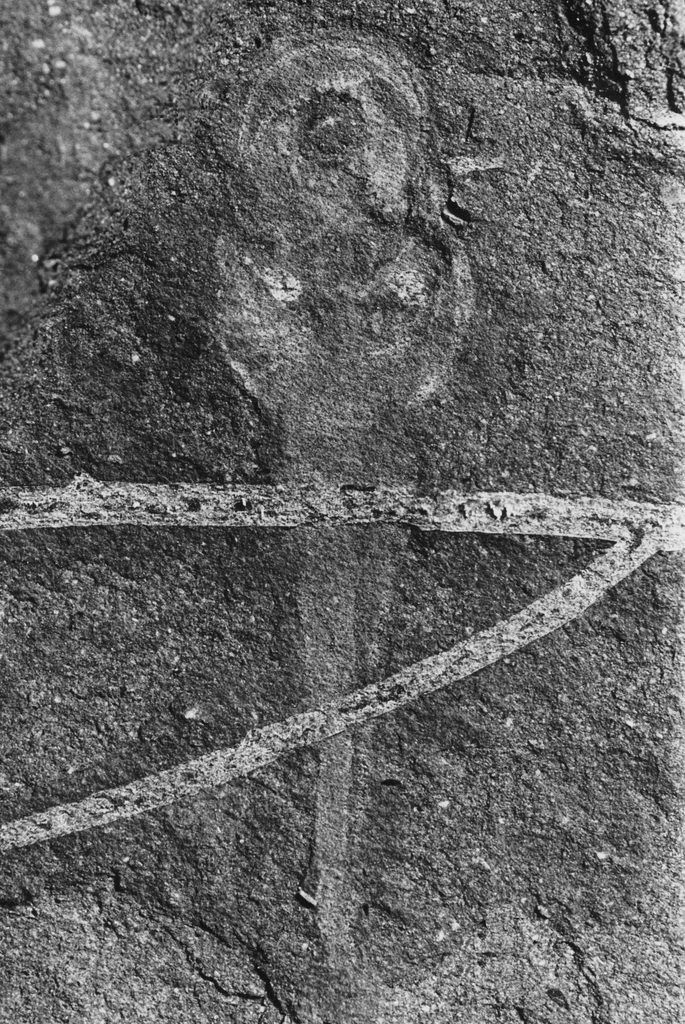
4.2 cm Holotype of Priscomyzon rinensis, the world’s oldest fossil lamprey from Waterloo Farm
The 100 Geological Heritage Sites featured in The Third 100 span 47 countries. They comprise 34 sites in Europe; 22 each in the Americas and the Asia-Pacific region; 11 in Africa; 6 in the Middle East; 3 in the High Seas; and 2 in Antarctica.
On the third day of the meeting, Dr Rob Gess of the Albany Museum and Rhodes University in Makhanda was invited to present a talk on Waterloo Farm. It was entitled “Late Devonian polar tetrapods and estuarine lagerstätte of Waterloo Farm, South Africa”.
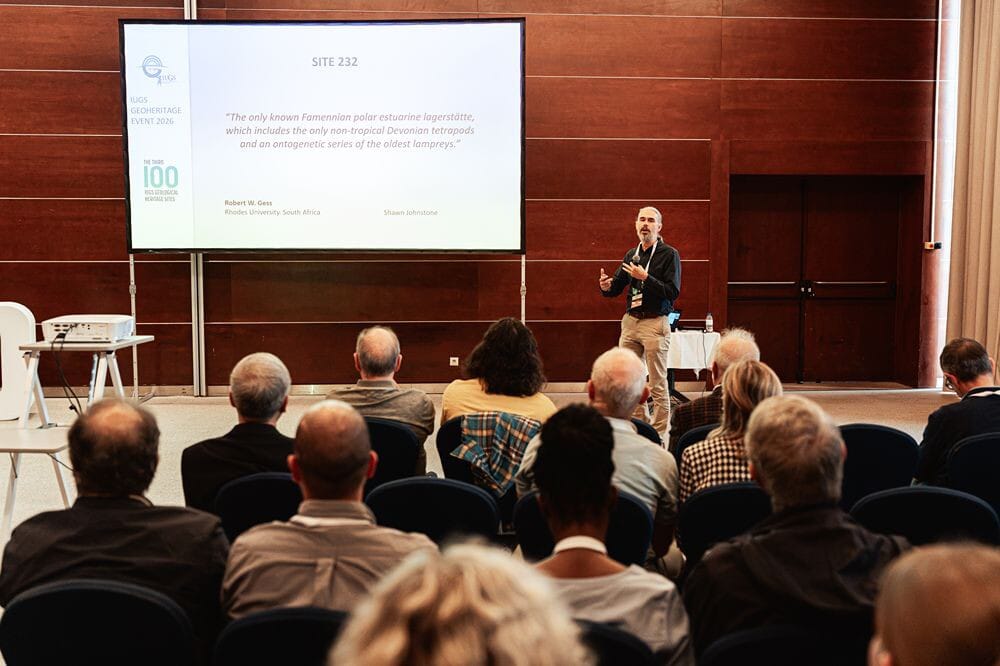
Dr Rob Gess presenting in Loule
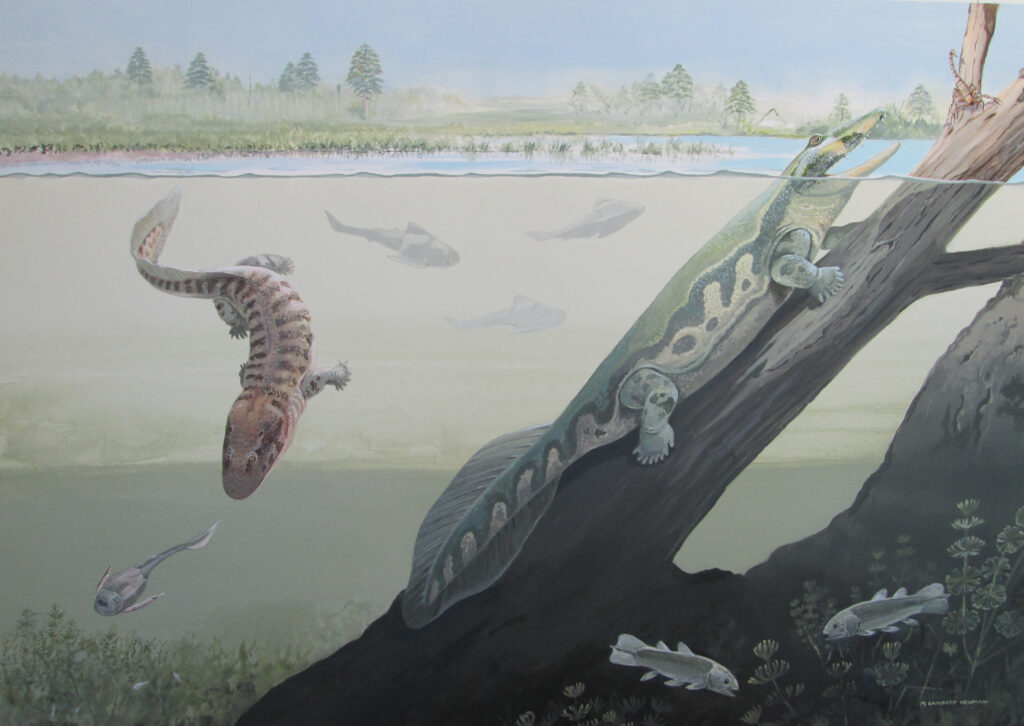
Apart from the selection of important characteristics of the Waterloo Farm lagerstӓtte, highlighted in its summary citation above, Waterloo Farm is famous for providing the most complete picture of a Famennian-aged estuarine ecosystem in the world.
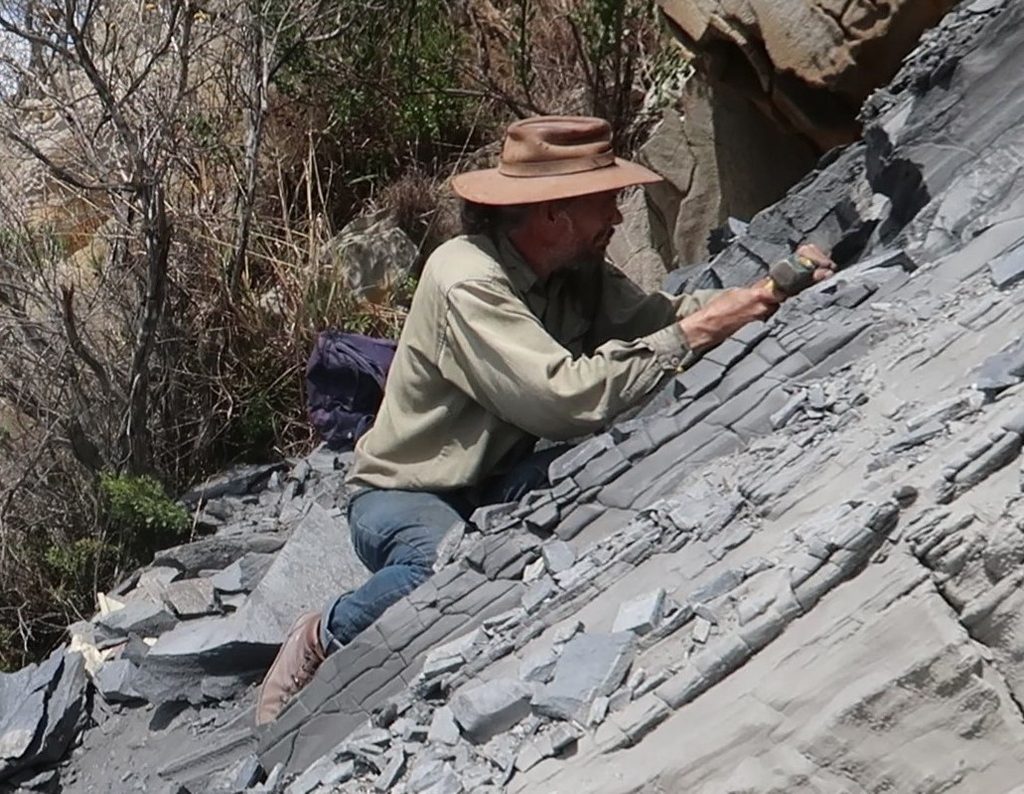
Research on the site, led by Dr Rob Gess over more than 30 years, in collaboration with a wide range of international specialists, has revealed clues to understanding of the entire estuarine ecosystem, as well as the adjacent terrestrial environment, including many rarely preserved types of organism, only recorded due to the site’s unusual preservation of soft tissue remains. As a result of its unique geological location, almost every organism represented by fossils at Waterloo Farm is entirely new to science. Of the seventy or more species of fossil represented by fossils from Waterloo Farm, 28 species new to science have so far been described and named.
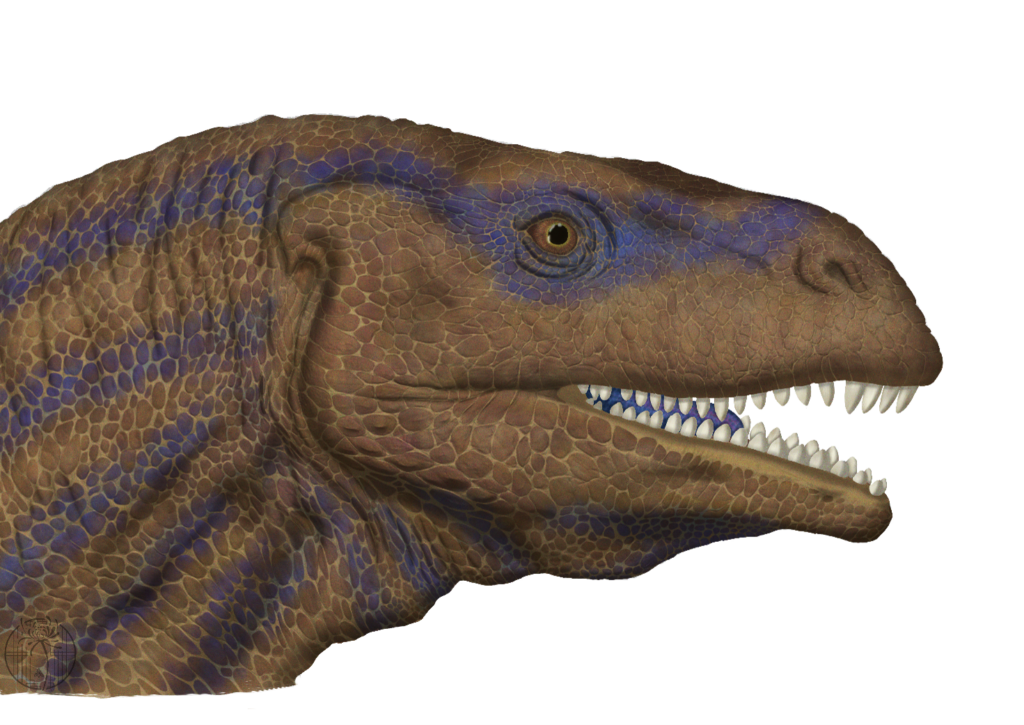
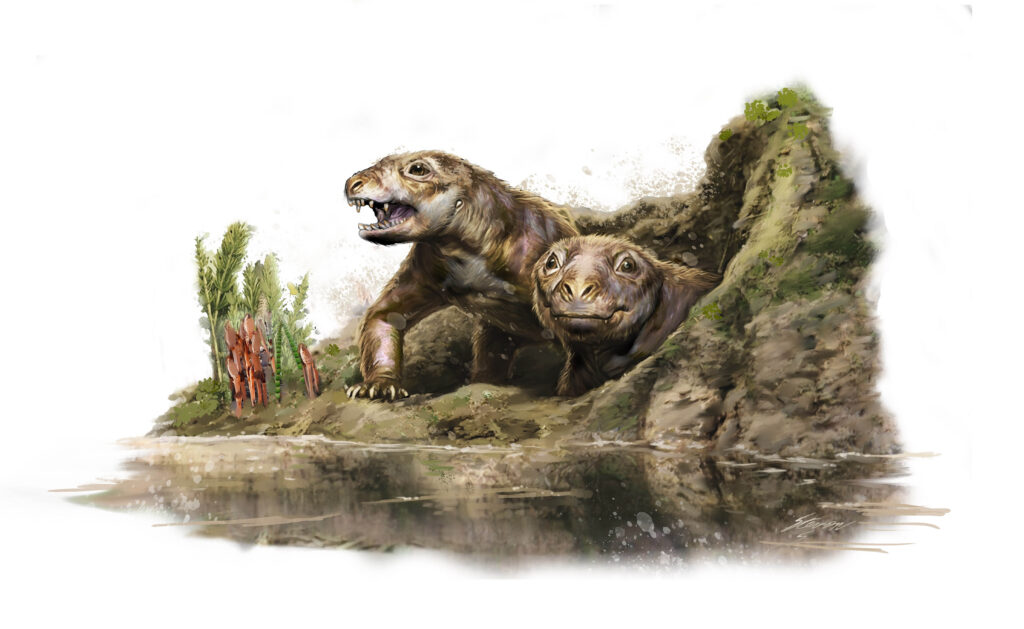
These include a wide range of taxa. Among them are Africa’s earliest tetrapods (four-legged animals), Tutusius and Umzantsia. Fish include sarcopterygians (lobe-finned fish, such as Serenichthys, Africa’s earliest known coelacanth), sharks (chondrichthyans), spiny-finned-sharks (acanthodians) and armour-plated fish (placoderms). There are also aquatic and terrestrial invertebrates, including the oldest terrestrial invertebrate from Gondwana – the scorpion Gondwanascorpio emzantsiensis. Aquatic and terrestrial plants include Africa’s earliest known trees.
Many of the names of these fossils are derived from the local vernacular. The first isiXhosa-derived scientific names of both animals and plants were assigned to organisms from Waterloo Farm.
Work is ongoing on the fossils of Waterloo Farm, in collaboration with leading international specialists, as well as postgraduate and postdoctoral students such as PhD candidate Ryan Nel and postdoctoral researcher Chris Harris.
The ongoing research on Waterloo Farm, led by Dr Rob Gess, is supported by GENUS (the DSTI-NRF Centre of Excellence in Palaeosciences) and the Millennium Trust.
Dr Rob Gess may be contacted at robg@imaginet.co.za
Read More: https://acrobat.adobe.com/id/urn:aaid:sc:EU:4c0ac871-6daa-49f5-8888-055fe3b4c5dd